
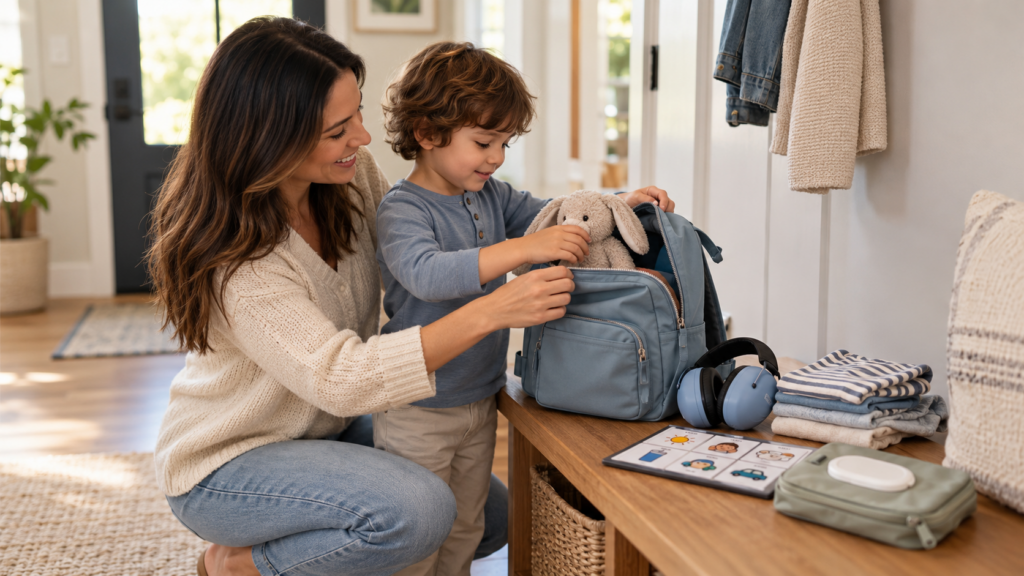
For some children, the feel of a clothing seam or the sudden sound of a hand dryer can shape an entire outing. When you’re preparing to leave home, knowing what your child finds comfortable and what they find difficult can be just as useful as knowing how many diapers to bring.
That knowledge gives your packing a purpose. A familiar comfort item, clothes your child happily wears or their usual communication aid may deserve an easy-to-reach place in the bag. Start with what helps your child, then consider what the destination might ask of them.
There isn’t one sensory packing list that works for every child. Some children find particular sounds, lights or textures overwhelming. Others seek certain sensations, and a child’s responses can vary across situations. A familiar item that helps one child may bother another. jamanetwork.com
The aim is to build a manageable bag around your child’s needs, preferences and usual supports. These ideas can also work for an outing backpack if your child no longer uses diapers.
Start With Your Child and the Outing
Before adding anything to the bag, think about where you’re going.
A short walk to a familiar park may require different preparation from a grocery trip, a restaurant visit or an appointment with an uncertain waiting time.
Ask yourself:
- What might my child find uncomfortable here?
- What has helped during similar outings?
- Will there be waiting, crowds or changes between activities?
- Where could we take a quieter break?
- How will my child tell me they need help or want to leave?
Include your child in these decisions in whatever way works for them. They might choose between two familiar objects, point to a picture or tell you which clothes feel comfortable.
Caregivers often make considerable adjustments to help children participate in everyday activities. Research involving caregivers of young autistic children highlights the importance of the fit between the child and the environment, as well as the strategies families use to support participation. pmc.ncbi.nlm.nih.gov
For everyday changing, cleaning and feeding supplies, start with our general diaper-bag guide. Then add the supports relevant to this particular outing.
Start with something your child already knows and likes.
Pack Familiar Comfort Items
That might be a small plush toy, a familiar cloth, a favorite book or an age-appropriate object they enjoy holding. It doesn’t need to be marketed as a sensory product.
Choose items based on what you’ve observed. Does your child reach for the object when they need reassurance? Do they enjoy its texture? Does it help during waiting or moving between places?
A toy with flashing lights, music or an unfamiliar texture could add unwanted stimulation. Try new items in a familiar setting before depending on them during a demanding outing.
Where practical, let your child keep their comfort item close. An object buried beneath spare clothes and snack containers may be difficult to find when it is needed.
Prepare for Noise and Bright Surroundings
Think about likely sources of noise: hand dryers, announcements, traffic, music or a crowded waiting area.
For a child who finds noise uncomfortable, familiar ear defenders or another suitable sound-management support may be worth bringing if they already use and tolerate it. Some children also find sunglasses helpful in bright surroundings. These are individual options rather than essentials for every bag. jamanetwork.com
Check that any item you bring fits comfortably and is appropriate for your child. If you’re unsure about hearing protection or its use, seek advice from an appropriate health professional.
Also consider what you can change about the outing itself. Could you visit at a quieter time, wait away from a speaker or choose a less crowded area?
A packed support can be useful, but it works alongside decisions about the environment. Guidance on sensory differences emphasizes reducing individual triggers and identifying quieter spaces when needed. www.autism.org.uk
Keep Communication Supports Within Reach
If your child uses a communication board, book, app or speech-generating device, make it part of your departure check.
Some children use speech alongside other ways of communicating. Augmentative and Alternative Communication (AAC) can include gestures, pictures and electronic devices, and may be used all the time or only in certain situations. Having some speech does not remove the potential need for communication support. www.asha.org
Bring the system your child already uses. Check that it is accessible, working and charged where applicable. If your child has an established low-tech backup, bring that too.
Keep communication aids available for use during the outing. Follow your child’s existing communication plan rather than introducing a new system at the last minute.
It also helps to distinguish two different purposes: a picture schedule can show what happens next, while a communication aid helps your child express a message. Depending on your child, either or both may be useful.
Make Waiting and Transitions More Predictable
An outing involves several small changes: leaving home, entering a building, waiting, finishing an activity and returning to the car.
For some children, knowing what comes next can make these transitions easier. Options might include a few destination photos, a familiar picture sequence or a usual object that accompanies a change of activity.
National Autistic Society guidance describes visual explanations, familiar objects and clear timetables as possible ways to support transitions for autistic people. Their usefulness depends on the individual. www.autism.org.uk
Keep the information simple and meaningful to your child. A short sequence showing “car, appointment, home” may be more useful than a detailed schedule.
Leave room for uncertainty, too. If the waiting time is unknown, avoid promising an exact finish. Use your child’s familiar way of explaining changes, and bring something they already enjoy for waiting.
Choose Familiar Food and Comfortable Spare Clothing
Food and clothing deserve a little extra thought because flavors, textures and fabric details can be uncomfortable for some children. jamanetwork.com
Bring Familiar Snacks When Appropriate
If snacks are part of the outing, choose foods your child can safely eat and usually accepts. Consider their age, allergies and any existing feeding or swallowing guidance.
A familiar cup, container or utensil may also be helpful if your child uses one.
There is no need to use a busy outing as the moment to introduce a new food. Familiar choices can make the packing plan more predictable, although preferences and needs may still change on the day.
For children with additional feeding requirements, our special health care needs outing guide covers broader preparation.
Pack a Spare Outfit Your Child Will Wear
A spare outfit is most useful when your child finds it comfortable.
Think about the clothes they already choose or tolerate: fabric, seams, tags, waistbands and socks. Check that the packed outfit still fits and suits the weather.
Include a bag for wet or soiled clothing so it can be kept separate from clean supplies.
You don’t need several complete outfits for every short trip. Choose a reasonable backup based on the length of the outing and your child’s usual needs.
Organize the Bag for Easy Access
A useful item is easier to use when you know where it is.
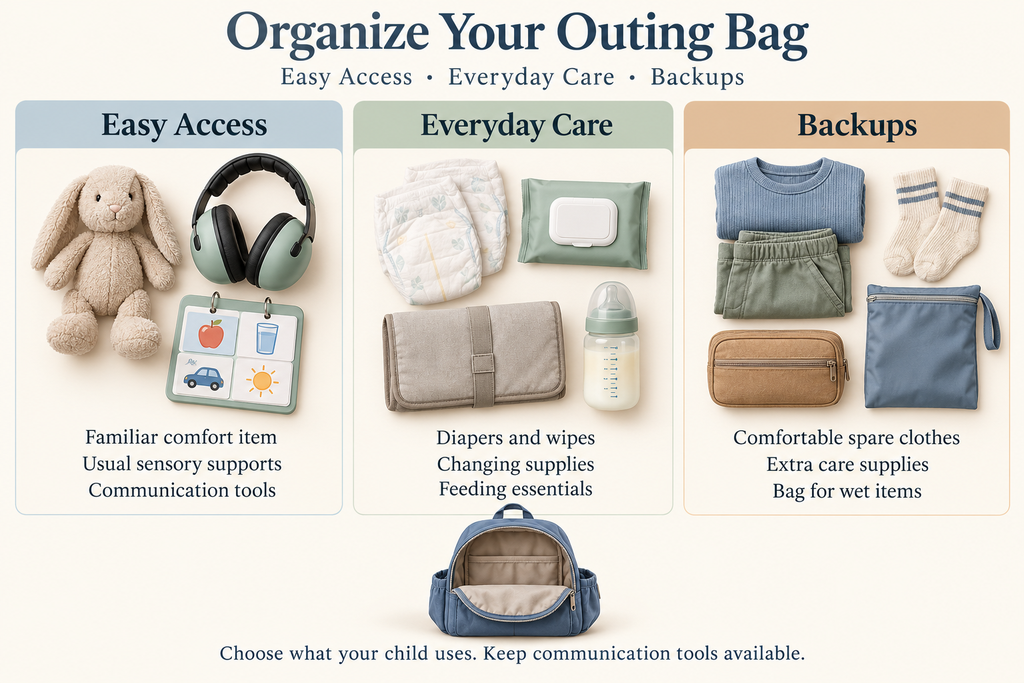
One practical approach is to divide the bag into three areas:
- Easy access: frequently used comfort items and other supports that need to be reached quickly.
- Everyday care: diapers, wipes, changing supplies and feeding items.
- Backups: spare clothing, extra supplies and a bag for wet items.
This is a suggested packing arrangement, not a clinical method. Adapt it to your bag and your child.
Use the same locations consistently where possible, especially if more than one caregiver uses the bag. Keep your child’s communication system accessible according to how they use it.
After a few outings, notice what you repeatedly search for. That item may deserve a more convenient place.
Plan a Break—and Leave Room to Change Plans
Before leaving, identify somewhere you could pause: a quieter corner, another room or an appropriate outdoor space.
Notice your child’s usual signals that they need support. These might include covering their ears, withdrawing, becoming unusually still or communicating differently. Such signals need context; they do not automatically mean sensory overload.
If your child becomes overwhelmed, reduce the demands where possible. Use a calm voice, keep language brief and offer familiar support without forcing it. Guidance recommends reducing sensory triggers, allowing time to recover and avoiding unwanted touch. www.autism.org.uk
Shortening an outing can be a reasonable adjustment.
Remember to consider other explanations for distress, too, including hunger, tiredness, pain or illness. Follow your child’s care plan and seek appropriate help when needed.
A Quick Check Before You Leave
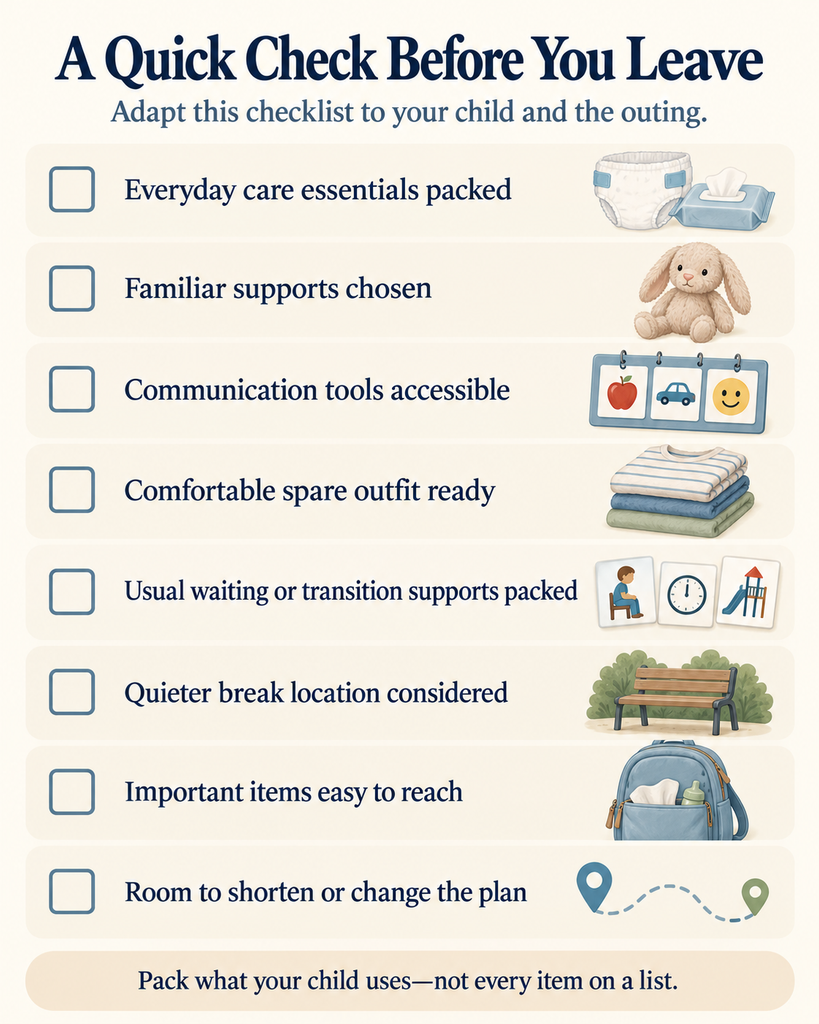
Use this as an adaptable check rather than a list of compulsory purchases:
- Are the everyday changing and feeding essentials packed?
- Have I chosen familiar supports that suit this outing?
- Can my child access their usual communication tools?
- Is the spare outfit comfortable and suitable?
- Do we have any familiar transition or waiting supports we use?
- Have I considered a quieter break location?
- Can I find the most important items quickly?
- Is there room to shorten or change the plan?
If your child needs medication or other medical supplies, pack them according to their individual care plan. Those items are relevant to some children and are not a universal requirement for sensory needs.
Review What Helped After the Outing
You don’t need a complicated record. A few notes can help:
What was difficult? What helped? What stayed unused? What would you change next time?
Keeping track of individual triggers and helpful responses can support conversations with professionals. If sensory difficulties regularly affect daily life, discuss them with your child’s pediatrician or an occupational therapist. jamanetwork.com
Your bag will evolve as your child grows and their preferences change. A manageable bag containing familiar, useful supports can help you respond more easily and leave more attention for enjoying time together.
This article offers general outing and packing ideas. It does not replace individualized advice from your child’s health care team. Choose age-appropriate items and follow any existing feeding, communication, sensory or medical care plan.
Sources and Further Reading
- Sensory Processing in Children — JAMA Pediatrics
- Caregiver’s Perspectives on the Sensory Environment and Participation in Daily Activities of Children With Autism Spectrum Disorder — American Journal of Occupational Therapy
- Autism and Sensory Processing — National Autistic Society
- Meltdowns: A Guide for All Audiences — National Autistic Society
- Augmentative and Alternative Communication — American Speech-Language-Hearing Association