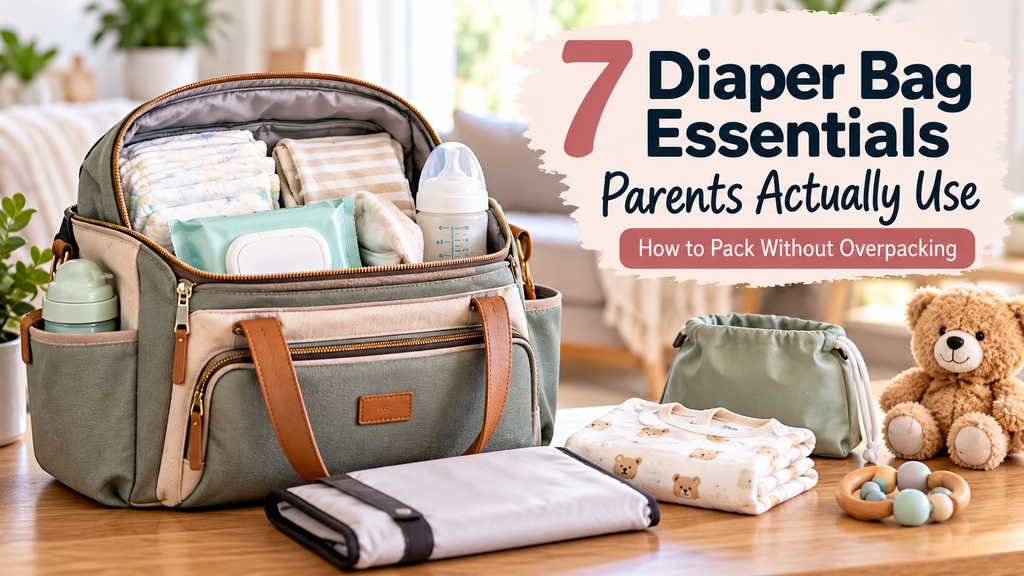
Choosing the right diaper bag essentials can quickly turn into a game of “what if?” What if the baby needs another outfit? What if you run out of wipes? What if feeding takes longer than expected? Before long, a simple bag can feel like you are packing for an entire weekend.
The goal is not to carry everything you might possibly need. It is to pack the essentials that help you handle the situations most likely to happen while you are away from home.
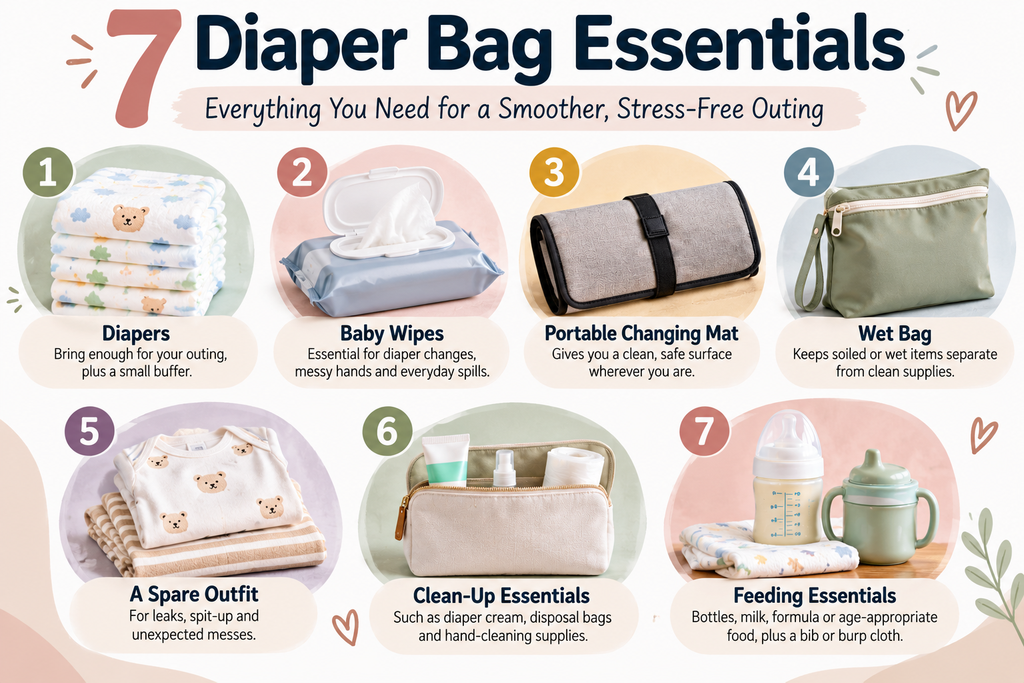
This guide covers seven practical diaper bag essentials parents can consider, along with a simple CHANGE–CLEAN–FEED method to help organize the bag without over packing.
What Should You Actually Pack in a Diaper Bag?
A well-packed diaper bag should help you deal with the most common needs without becoming unnecessarily heavy. The exact contents will change depending on your baby’s age, how long you will be away from home and where you are going.
Instead of packing for every possible situation, start with the essentials and adjust them for the day ahead. These seven items cover changing, cleaning, feeding and the small surprises that often come with being out with a baby.
7 Diaper Bag Essentials Parents Actually Use
Diapers and Wipes
Diapers and wipes form the foundation of almost every diaper bag. How many diapers you need will depend on your baby’s age and how long you expect to be away, but packing a small extra supply can help when an outing takes longer than planned.
Keep wipes somewhere easy to reach rather than buried at the bottom of the bag. They are useful not only for diaper changes but also for cleaning sticky hands, small spills and other everyday messes
A Portable Changing Mat
A portable changing mat gives you a clean, familiar surface when a proper changing station is unavailable. Foldable or wipe-clean designs are particularly useful because they take up little space and can be cleaned after use.
Keeping the changing mat together with diapers and wipes also makes diaper changes quicker because everything you need is in one part of the bag
A Wet Bag
Babies have a way of producing wet or messy clothes at the least convenient time. A reusable wet bag gives you somewhere separate to store soiled clothing, used bibs or other damp items until you get home.
A zippered, water-resistant design can also help prevent the rest of the diaper bag from becoming damp or picking up unwanted smells.
A Spare Outfit
Spills, diaper leaks and unexpected messes can make a change of clothes useful even on a short outing. One complete spare outfit is usually more practical than filling the bag with several changes of clothing.
Choose something appropriate for the weather and easy to put on. For younger babies, you may also want to consider an extra bib or burp cloth
A Simpler Way to Organize Your Diaper Bag
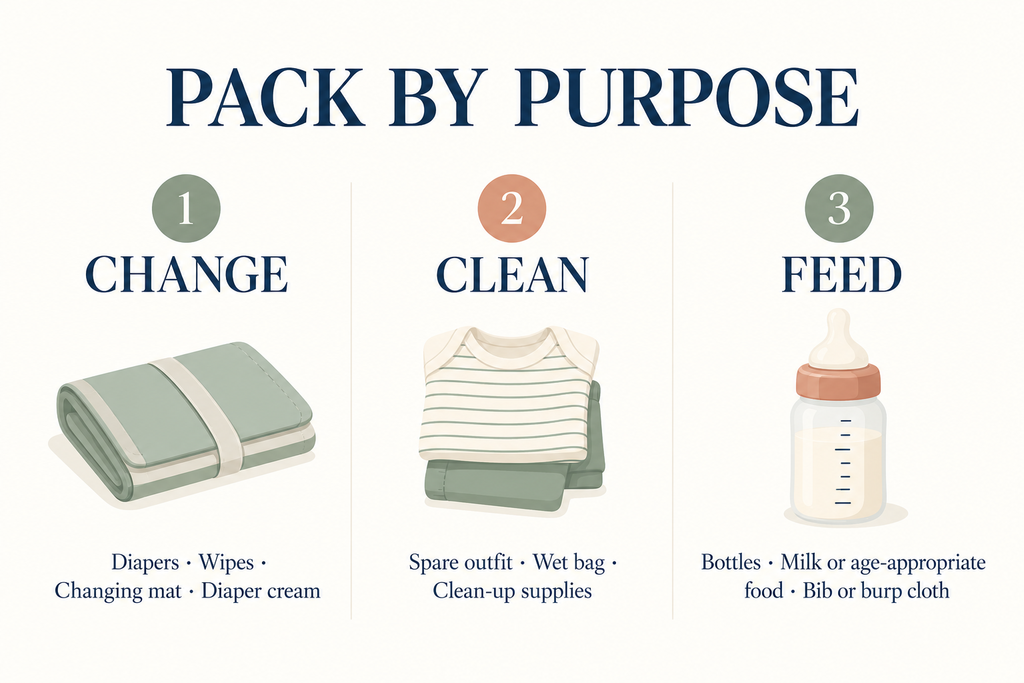
Rather than treating your diaper bag as one large storage space, it can help to organize what you carry by purpose: CHANGE, CLEAN and FEED.
CHANGE keeps diapers, wipes, a changing mat and diaper cream together. CLEAN covers the spare outfit, wet bag and basic clean-up supplies. FEED keeps bottles, milk or age-appropriate food, and a bib or burp cloth within easy reach.
This simple system can make it easier to find what you need quickly, especially when you are dealing with a hungry baby, a diaper change or an unexpected mess
Clean-Up Essentials
A few basic clean-up supplies can make small messes much easier to manage while you are away from home. Depending on your baby’s age and your usual routine, this might include tissues, disposable bags, hand-cleaning supplies or a small cloth.
There is no need to carry large quantities. The aim is simply to have enough to handle the everyday spills and clean-ups that are difficult to predict
Feeding Essentials
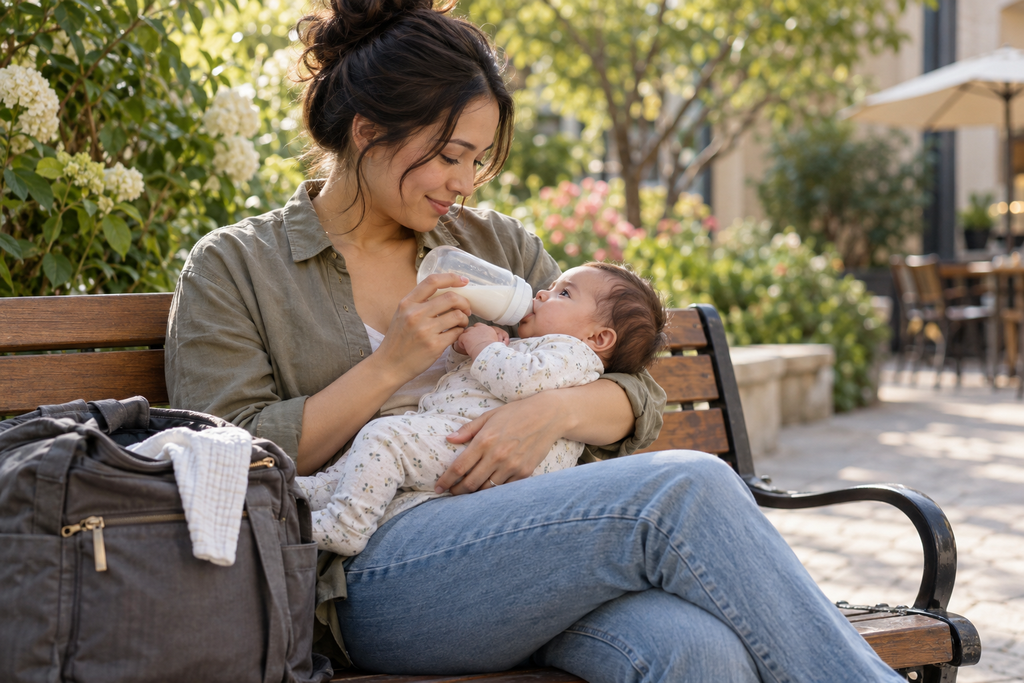
Feeding supplies will vary depending on your baby’s age and how they are fed. For some parents, this may mean bottles and prepared milk or formula; for older babies, it might include age-appropriate food, snacks or a feeding pouch.
A bib or burp cloth can also be useful without taking up much room. Keep feeding items together so they are easy to reach when your baby gets hungry rather than having to search through the entire bag.
A Few Comfort and Just-in-Case Items
Once the main changing, cleaning and feeding essentials are packed, consider one or two small items that make outings more comfortable. Depending on your baby, this could be a pacifier, teether, small comfort toy or another familiar item that helps settle them.
The key is restraint. “Just in case” items are often where diaper bags become overloaded. Choose only what your baby regularly uses rather than packing for every possible situation.
The 60-Second Diaper Bag Check
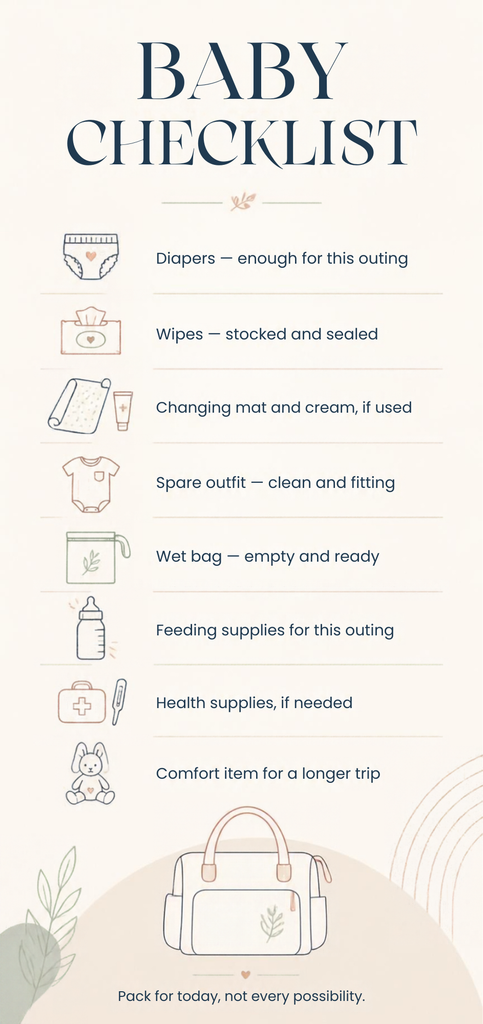
Before leaving home, you do not need to unpack the entire bag to make sure you are prepared. A quick check can help you catch the essentials that are easiest to forget
Adjust the Bag to Your Baby and Your Day
There is no single list of diaper bag essentials that works perfectly for every family. What you pack will depend on your baby’s age, feeding routine, the length of the outing, the weather and where you are going.
A quick trip to the store may require only the basics, while a full day away from home may call for extra diapers, feeding supplies or another change of clothes. Start with the essentials, then add only what makes sense for that particular outing.
Pack for the Outing, Not Every Possibility
A useful diaper bag is not necessarily a full diaper bag. The aim is to carry enough to handle your baby’s everyday needs without making every outing harder with unnecessary weight and clutter.
Start with changing, cleaning and feeding. Add a spare outfit and the few extras your baby regularly uses, then adjust the quantities according to how long you expect to be away.
With a simple system and a quick check before leaving home, your diaper bag can stay practical, organized and ready for the day ahead.
Pingback: Diaper Bag Essentials for Special Health Care Needs
Pingback: Diaper Caddy Organization: What to Keep Inside
Pingback: How to Pack a Diaper Bag for a Child With Sensory Needs