Persimmon soap promises a targeted approach to body odor, especially the changes some people notice as they get older. But does it offer enough benefit to justify paying more than you would for an ordinary cleanser?
The answer deserves some care. There is published research behind the interest in persimmon-containing soap, but the evidence is narrower than many product advertisements suggest. Before buying, it helps to understand what has been studied, what the label tells you, and how to judge value without relying on ambitious claims.
What Is Persimmon Soap?
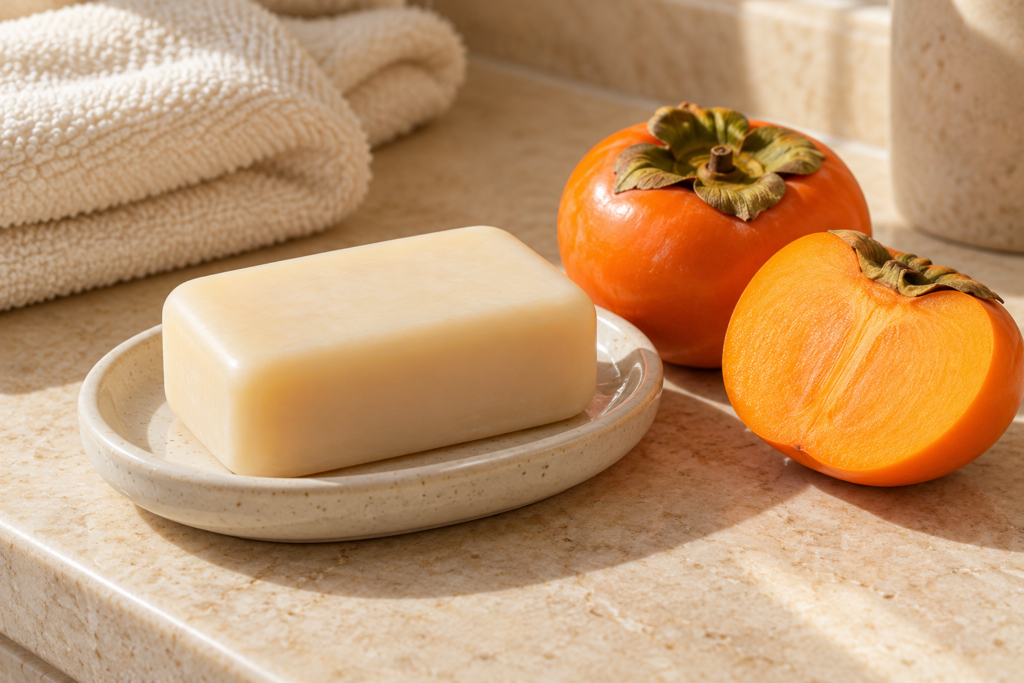
Persimmon soap is a cleansing product made with persimmon-derived ingredients. Much of the interest centers on persimmon’s plant compounds, including tannins, and their potential role in controlling odor.
However, “persimmon soap” does not describe one standard formula. Two bars carrying that name may contain different cleansing ingredients, fragrances, botanical extracts, and amounts of persimmon-derived material.
Treat the name as a starting point. The full formula and the evidence for that particular product matter more than the fruit pictured on its packaging.
Why Is It Associated With Age-Related Body Odor?
One compound often mentioned in persimmon soap marketing is 2-nonenal.
A 2001 study examined body odor in people aged 26 to 75 and detected 2-nonenal only among participants aged 40 or older. The researchers linked its formation to the oxidative breakdown of certain fatty acids on the skin. That finding helped establish interest in 2-nonenal as one contributor to changes in body odor with age. It did not test persimmon soap.
This distinction matters when shopping. Research showing that an odor compound exists does not establish that a particular soap removes it effectively.
It also does not mean everyone develops a noticeable odor at 40, or that a change in scent indicates poor hygiene.
Does Persimmon Soap Actually Work?
There is some encouraging evidence, but it requires context.
A 2012 study followed 20 men aged 43 to 75 who used a soap daily for four weeks. The soap contained a mixture of extracts from oolong tea, tiencha, green tea, and astringent persimmon. Researchers reported reductions in measured 2-nonenal and improvements in odor assessments.
For buyers, the main limitation is that this was a small study of a combined formula. Its findings cannot establish how much of the reported benefit came from persimmon specifically, or whether another persimmon soap would perform similarly.
The sensible conclusion is that persimmon-containing soap may be worth considering, while claims of guaranteed results or superiority over ordinary cleansers need stronger, product-specific support.
What to Check Before Buying
1. A complete ingredient list
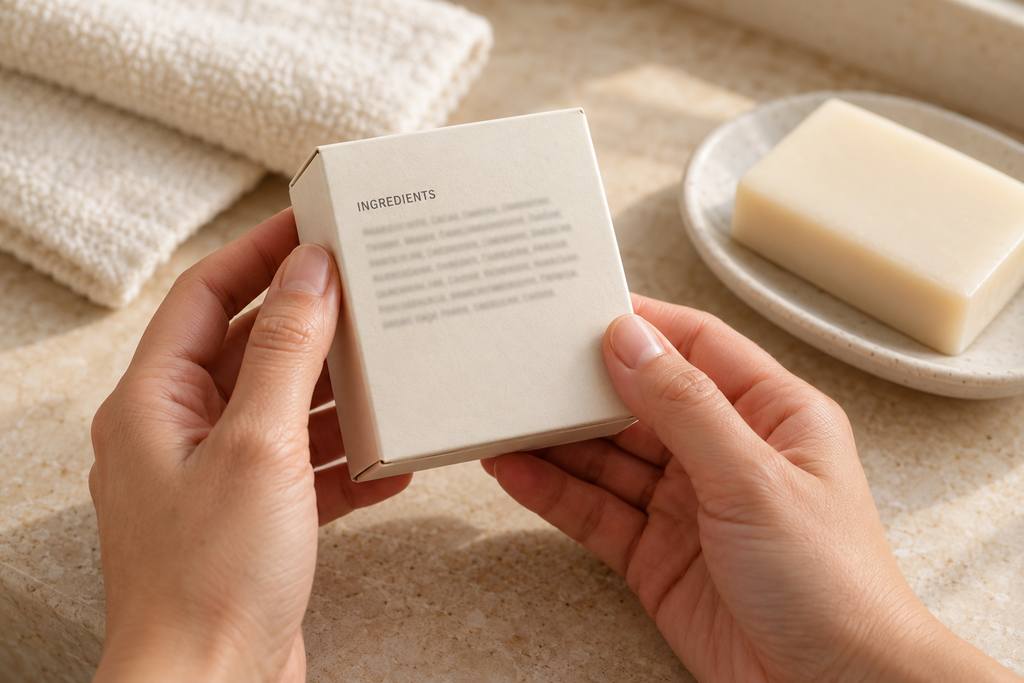
Choose a seller that publishes the full ingredient list before purchase.
Check whether the formula identifies a persimmon-derived ingredient and whether it contains anything you already know irritates your skin. A prominent persimmon claim on the front of the box tells you little about the rest of the formula.
An ingredient list also cannot, by itself, prove that the finished product controls odor.
2. Fragrance and skin comfort
A soap can smell appealing and still be unsuitable for your skin.
For dry or eczema-prone skin, fragrance deserves particular attention. The American Academy of Dermatology recommends fragrance-free products for people with eczema and explains that “unscented” products may still contain fragrance ingredients used to mask other smells.
Do not assume that botanical ingredients or a “natural” label guarantee gentleness. The Academy also cautions that natural ingredients can aggravate allergies.
If you already have a cleanser that keeps your skin comfortable, consider that an important benchmark when assessing a more expensive alternative.
3. Evidence behind the claims
Look closely at statements such as “clinically proven” or “removes 99% of odor.”
Useful questions include:
- Was the finished product tested, or only an ingredient?
- Did testing involve people using it on their skin?
- How many people participated?
- Was there a comparison with ordinary soap?
- Does the seller provide the actual study?
Laboratory findings, customer testimonials, and a human study answer different questions. A convincing product page should make the distinction clear.
4. Price relative to size
Compare the price per gram or ounce, including delivery charges.
For illustration, a 100gram bar costing $12 works out at $0.12 per gram. A 150gram bar costing $15 works out at $0.10 per gram. The second costs more upfront but less for the quantity supplied.
That calculation does not establish which soap works better. It simply helps you avoid confusing a smaller purchase price with better value.
For a first purchase, one bar is usually a more manageable trial than a multi pack or subscription.
5. Seller reliability and return terms
Check who makes the product, who sells it, and whether the ingredient information is clear and consistent.
Read the return policy before opening the package. Some sellers restrict returns on used personal-care products. Also check whether a discount requires recurring deliveries and how cancellation works.
How to Assess Your First Purchase
Decide what would make the soap worth buying again: a noticeable improvement in odor, comfortable skin, acceptable fragrance, and a reasonable cost.
Follow the manufacturer’s directions. Introduce the product on a small area first, and stop using it if irritation develops. For people with eczema, the American Academy of Dermatology recommends testing new skin-care products before wider use.
Keep the rest of your routine reasonably consistent while assessing it. Changing your soap, deodorant, laundry products, and bathing habits together makes it harder to identify which change helped.
Regular clothing changes and laundering also remain part of managing body odor, as the NHS advises.
When Buying Another Soap May Not Be the Best Next Step
If your usual body odor changes, you suddenly sweat much more than normal, or self-care is not helping and the problem affects your confidence, seek medical advice. These are reasons the NHS gives for speaking with a clinician.
A product advertised for age-related odor should not automatically become the explanation for every new change in scent.
Is Persimmon Soap Worth Buying?
Persimmon soap can be a reasonable purchase for someone curious about a different approach to odor control, provided the formula suits their skin and the price feels acceptable.
Buy with measured expectations. The published soap study offers an encouraging signal, but it does not validate every persimmon product or establish persimmon’s individual contribution.
Choose a clearly labeled product, start with a small purchase, and judge it by your own results and skin comfort. A worthwhile soap should earn a repeat purchase through its performance not through pressure to feel embarrassed about aging.