
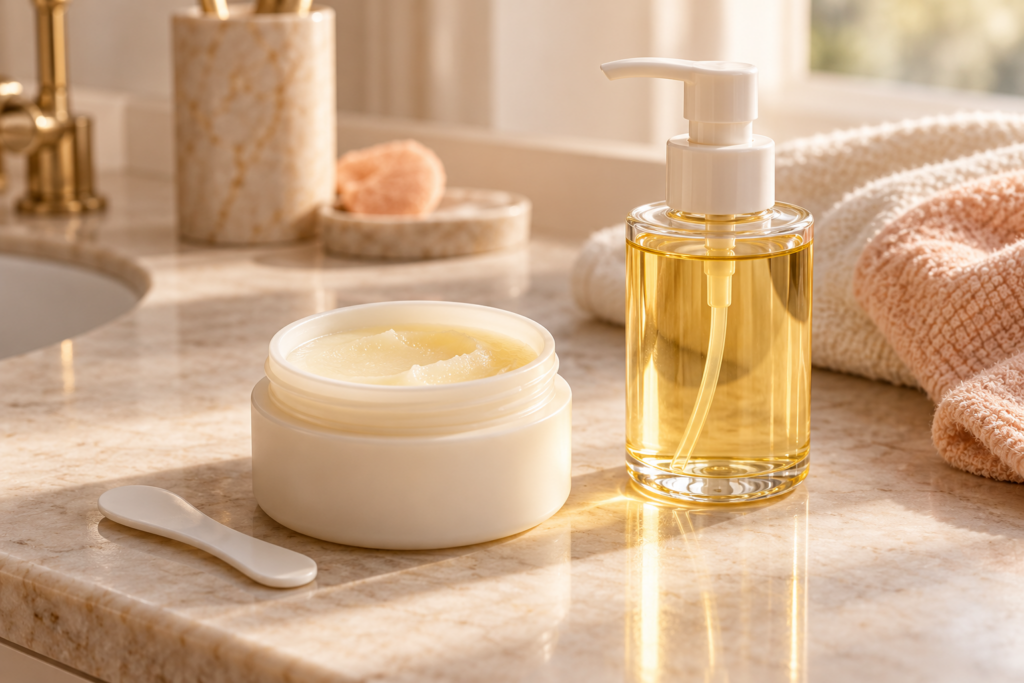
After a long day, taking off sunscreen and makeup should feel manageable. But when you start looking for a cleanser, the choice between a balm in a jar and an oil in a bottle can raise more questions than it answers.
Does one clean better? Is a balm only for dry skin? And do you really need to wash your face twice?
The most useful starting point is this: a cleansing balm usually begins as a solid or semisolid texture, while a cleansing oil starts as a liquid. Choosing between them involves the individual formula, how it rinses, your skin’s response and the way you prefer to use it. Neither format is automatically the better purchase.
Cleansing balm vs cleansing oil at a glance
| What to compare | Cleansing balm | Cleansing oil |
|---|---|---|
| Starting texture | Solid or semisolid; usually melts as you massage it | Liquid from the start |
| Dispensing | Often scooped from a jar; other packaging exists | Often poured or pumped from a bottle |
| Everyday preference | Worth considering if you prefer a texture that stays where you place it | Worth considering if you prefer dispensing a liquid |
| Rinsing | Follow the specific formula’s instructions | Follow the specific formula’s instructions |
| Skin suitability | Assess the ingredients and your response | Assess the ingredients and your response |
| Travel practicality | Check the closure, size and storage directions | Check the closure, size and whether the pump locks |
Use these differences to narrow your options, rather than treating the table as a promise about every product.
What do cleansing balms and cleansing oils do?
Both formats are commonly sold for removing makeup and sunscreen. A balm typically becomes oily as you massage it, while an oil is already fluid.
Some formulas turn milky when water is added. For example, DHC’s Deep Cleansing Oil instructions describe applying it to dry skin, adding water and then rinsing. That is an example of one product’s directions, rather than a rule for every cleanser.
Before buying, check what the product is intended to remove and how the manufacturer says to use it. A pleasant texture alone does not tell you how well a cleanser will remove your usual makeup.
Which is better for removing sunscreen?
Research gives us a useful clue, but no clear balm-versus-oil winner.
A small study involving 20 participants compared water, a foaming cleanser and a cleansing oil for removing tested sunscreens. The cleanser and oil both removed the non-water-resistant sunscreen effectively, while the oil performed better on the water-resistant sunscreen.
The study did not test cleansing balms or a two-step routine. It therefore does not establish that oils outperform balms, or that everyone who wears sunscreen needs to double cleanse.
For shopping purposes, look for clear removal instructions that match what you wear. Water-resistant sunscreen and long-wear makeup may require a different approach from a lighter daily routine.
Texture and packaging: what will you enjoy using?
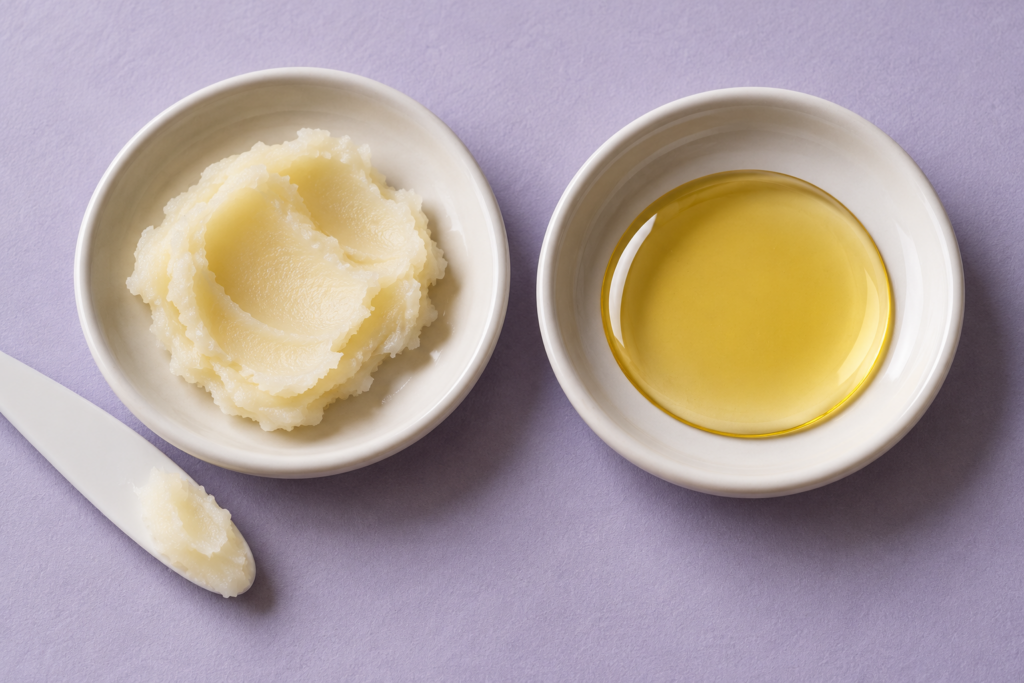
Consider a balm if you prefer a scoopable texture
You may like controlling a small amount in your fingertips before spreading it over your face. Check whether the packaging suits your routine, whether it includes an applicator and how the product should be stored.
A jar is not automatically travel-proof. Inspect the closure and follow storage directions.
Consider an oil if you prefer a liquid
A pump may be convenient when you want to dispense the product quickly. Check whether it locks and whether the recommended amount feels practical for regular use.
There is no need to choose the texture that looks most luxurious online. Choose the one you will find comfortable to use at the end of an ordinary day.
How should your skin affect the choice?
Dry or sensitive skin
A rich texture can sound reassuring, but it does not establish that a cleanser will suit sensitive skin. Cleveland Clinic advises avoiding harsh, excessively drying or fragranced cleansers and suggests a gentle, unscented water-based cleanser for dry, sensitive skin.
If your current cleanser already works comfortably, you do not need to add a balm or oil simply to make your routine more elaborate.
Oily or acne-prone skin
Avoid assuming that a cleansing oil will prevent breakouts or that a balm cannot clog pores.
The American Academy of Dermatology recommends an oil-free makeup remover followed by a gentle cleanser for people with acne. It also advises looking for products labeled oil-free, non-comedogenic or “won’t clog pores.
Those recommendations are a reason to consider alternatives to both formats if you are acne-prone. If breakouts persist or worsen, a dermatologist can help assess your routine.
Do you need to double cleanse?
Double cleansing generally means using an oil-based product first, followed by a water-based cleanser.
Cleveland Clinic explains that this can help with waterproof makeup and water-resistant sunscreen, but many people only need one thorough wash with a gentle cleanser. Extra washing can contribute to dryness and irritation.
Before adding a second step, ask what problem it will solve. Are you struggling to remove long-wear makeup, or are you adding another product because a routine online includes it?
If you choose a product designed as a first step, check its directions before buying so you understand the full routine involved.
How to use your chosen cleanser
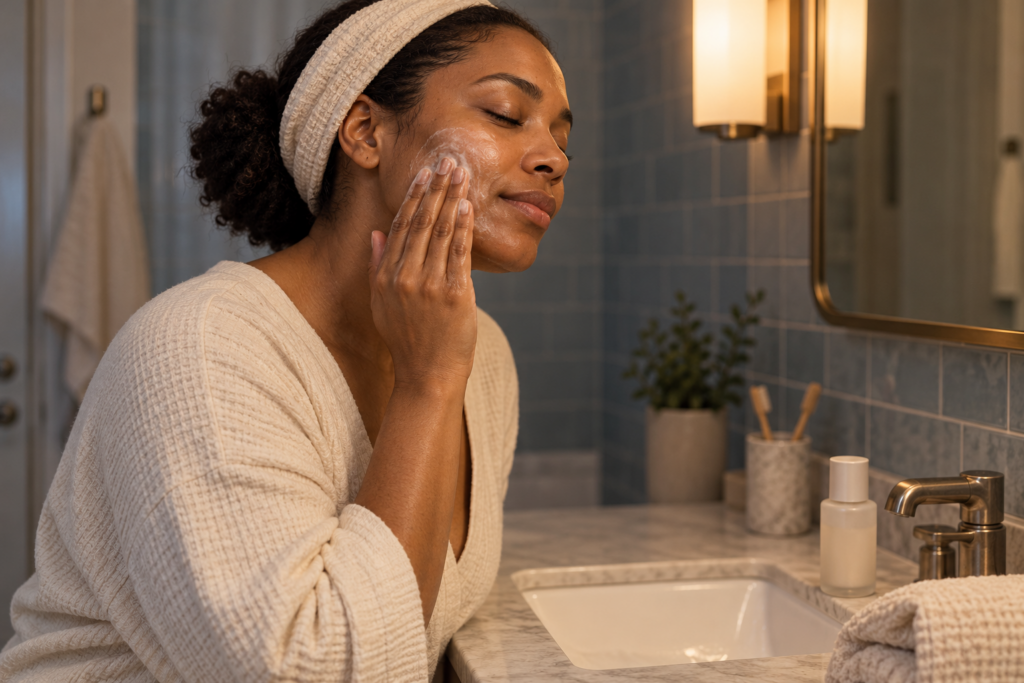
Start with the label. Instructions can differ between products.
- Dispense the recommended amount. Check whether the product calls for dry hands and dry skin.
- Massage gently with your fingertips. Avoid scrubbing or pulling at your skin.
- Add water if directed. Some formulas instruct you to do this before rinsing.
- Rinse thoroughly with lukewarm water. Follow any directions about a second cleanser.
- Pat dry gently. The American Academy of Dermatology recommends a soft towel and applying moisturizer if skin is dry or itchy.
Check the instructions before using a cleanser around your eyes. Do not assume every facial cleansing product is intended for eye-makeup removal.
A simple checklist before buying
- Purpose: Is it intended for the sunscreen or makeup you usually wear?
- Directions: Does it fit the number of steps you want?
- Ingredients: Does it contain anything you already know your skin does not tolerate?
- Texture: Would you prefer a scoopable balm or a liquid?
- Packaging: Is it convenient to dispense, close and store?
- Cost: Consider the recommended amount per use alongside the purchase price.
- Need: Will it solve a problem your current cleanser leaves unresolved?
If you are undecided, a smaller size may let you assess a formula before committing to a larger purchase.
Choosing for your evening routine
A balm may appeal if you enjoy a scoopable texture. An oil may appeal if you prefer a liquid in a bottle. Either way, assess the actual product rather than relying on the format’s reputation.
Your evening routine should remove what you wear during the day, feel comfortable and be easy to repeat. Start with that goal, then choose the texture and packaging that fit.
References
- DHC — Deep Cleansing Oil: product directions. Manufacturer example, not a product endorsement.
- Chen et al. — The optimal cleansing method for the removal of sunscreen: Water, cleanser or cleansing oil? Journal of Cosmetic Dermatology, 2020.
- Cleveland Clinic — Double Cleansing Method Explained: Should You Try It?
- American Academy of Dermatology — I have acne! Is it okay to wear makeup?
- American Academy of Dermatology — Face washing 101