As an Amazon Associate I earn from qualifying purchases.
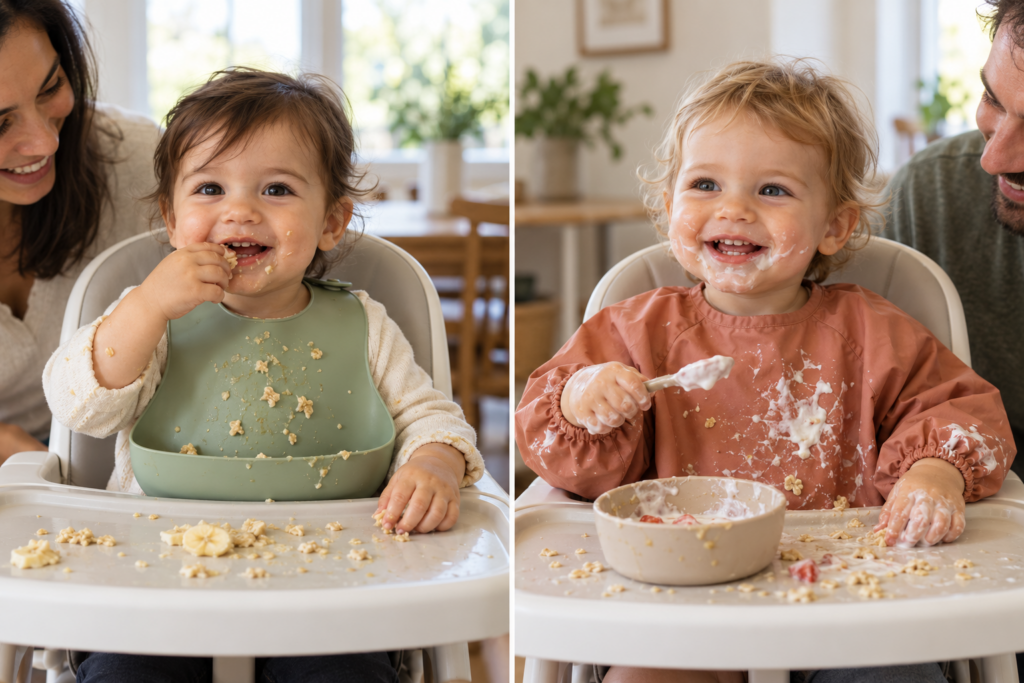
Breakfast is over, but the cleanup is just beginning. A mother lifts her little one from the highchair and discovers oatmeal on the cuffs, mashed banana down the front of the shirt, and a few more surprises in the seat. The bib caught some of the food, yet an outfit change is still needed. At the next meal, she might reasonably wonder: would a different kind of bib help?
The silicone bib vs sleeved bib choice starts with where the food ends up. A silicone bib with a catch pocket offers front coverage and a convenient place for some dropped food to land. A sleeved bib extends protection across the arms and more of the clothing.
A bib will not make mealtime spotless. But understanding the differences can help you choose one that suits your child, the food being served and your cleanup routine.
Silicone Bib vs Sleeved Bib: A Quick Comparison
In this article “silicone bib” means the familiar sleeveless style with a molded catch pocket. “Sleeved bib” means a feeding smock with long sleeves, usually made from coated fabric. Features vary between products.
| What matters | Silicone bib | Sleeved bib |
|---|---|---|
| Coverage | Mainly the chest and front of the body | Chest, arms and shoulders; coverage varies |
| Catch pocket | Often a molded pocket | Some have a fabric catch pocket |
| Practical use | Meals where spills mainly fall down the front | Meals where food gets rubbed onto sleeves and clothing |
| Cleaning | Many can be hand washed; check dishwasher instructions | May need hand or machine washing, depending on the label |
| Before reuse | Needs cleaning and drying | Needs cleaning and drying, including cuffs and seams |
| Fit checks | Neck opening, weight and pocket position | Neck opening, sleeve length, cuffs and freedom of movement |
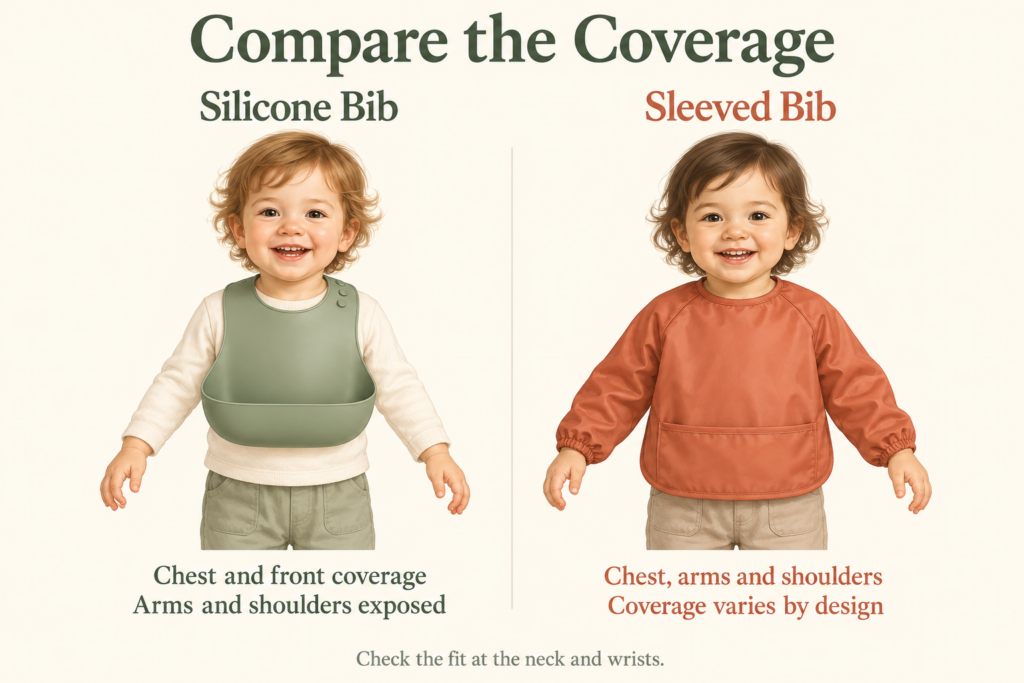
Start by looking at your child’s clothing after a typical meal. Food mainly down the front suggests different coverage needs from food spread across both sleeves.
When a Silicone Bib Makes Sense
A silicone bib is worth considering when you want front coverage without dressing your child in a feeding smock.
The catch pocket is a useful feature, but it won’t catch everything. Food can still miss the pocket, drop beside the child or land between the bib and the highchair tray.
For instance, Mushie’s silicone bib has an adjustable neck and a deep front pocket. Its care instructions allow washing with warm water and mild soap or using the dishwasher’s top rack, while recommending hand washing printed versions to preserve the design. Always check the instructions on the bib you buy.
View the Mushie Silicone Baby Bib on Amazon (paid link)
Consider it when the mess stays mostly in front
A silicone bib may suit a child whose dropped food and dribbles mainly land on the chest or lap. It can also be convenient for a short snack when you want to put a bib on quickly.
What it can not do is cover the arms. If your little one wipes yogurt onto their upper arms or rests oatmeal-covered wrists on their sleeves, a front bib cannot protect those areas.
Check how the pocket sits at the tray
Before choosing a bib, consider your child’s seated position. A pocket that looks generous in a product photograph may sit differently against your high-chair tray.
Check whether it stays open and whether your child can reach food comfortably. A bib should work with the seating arrangement you already use.
When a Sleeved Bib Makes Sense
A sleeved bib is worth considering when the mess spreads beyond the chest.
Some children lean into the meal, wipes hands down their arms or regularly finishes lunch with food around the cuffs. Covering those areas may reduce how much food reaches the outfit underneath.
Bumkins’ sleeved bib for example, has long sleeves, elasticized cuffs, a back-tie closure and a catch pocket. The manufacturer describes a polyester fabric with a waterproof coating and gives washing and drying instructions for that particular design.
View the Bumkins Sleeved Bib 2-Pack on Amazon (paid link)
Consider it when sleeves need protection
Extra coverage helps most with foods that spread easily, such as oatmeal, yogurt and saucy pasta.
Coverage still has limits. Food can enter through gaps at the neck or wrists, and a sleeved bib does not necessarily cover the child’s entire lap. The fit matters as much as the amount of fabric.
Include the bib itself in your cleanup plan
A sleeved bib may save clothing from some mess, but it also becomes an item to clean.
Check the cuffs, seams and pocket after meals. Follow the product’s washing instructions and allow it to dry fully before storing it. Bumkins’ care guidance, for instance, recommends removing food residue before washing and ensuring the fabric is completely dry before storage.
So the real question is, Would you rather wash a feeding smock or change the clothes underneath?
Match the Bib to the Meal and Your Child
These examples are starting points based on coverage, not results from side-by-side product testing. Your child’s eating habits may change the choice.
| Meal or situation | A useful starting choice | What to watch |
|---|---|---|
| A short snack with a few dropped pieces | Silicone bib | Whether the pocket catches food in your child’s seated position |
| Spoon-fed food with dribbles down the chest | Silicone bib | Gaps around the neckline |
| Oatmeal or yogurt spread onto arms | Sleeved bib | Cuff fit and food collecting around the wrists |
| Saucy pasta with frequent hand wiping | Sleeved bib | Coverage around the shoulders and lap |
| Eating away from home | Whichever fits your packing and cleaning routine | How you will carry the dirty bib afterward |
The same food can produce a different mess from one child to another. One toddler may eat yogurt with only a few drips; another may spread it from wrist to elbow.
Go by the mess you actually see, not by the name of the meal.
What to Check Before Buying
For more guidance on choosing practical baby gear, read our guide to baby products that grow with your child.
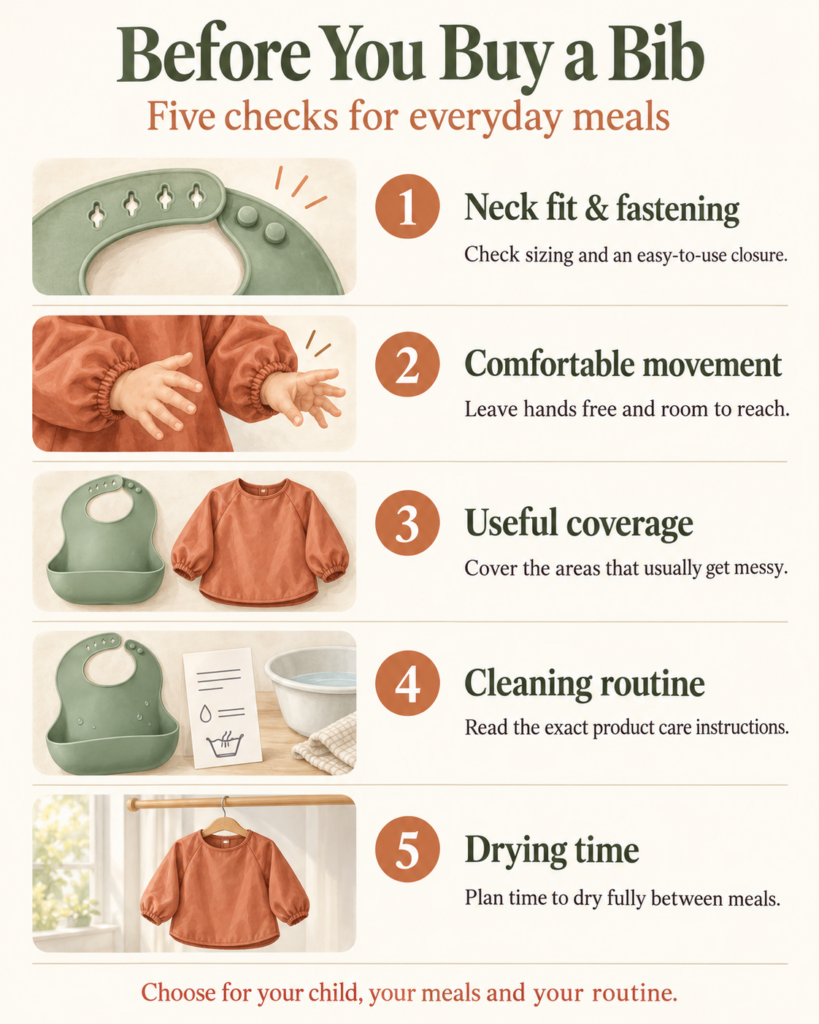
1. Neck fit and fastening
Look for an appropriate size and a fastening you can use easily. Check the manufacturer’s age and sizing guidance but also consider the measurements and your child’s build.
An opening that leaves a large gap may allow food onto clothing. A bib that pulls or feels uncomfortable may be difficult for your child to tolerate.
2. Comfortable movement
With a silicone bib, consider its weight and how it rests against the chest and tray.
With a sleeved bib, check that the sleeves allow comfortable reaching and that the cuffs do not cover the hands or feel restrictive.
3. Useful coverage
Look closely at product photographs and dimensions. Long sleeves do not automatically mean full lap coverage, and a large catch pocket does not guarantee that food will land inside it.
Check the areas you most want to protect.
4. Care instructions that fit your routine
Do you want to wash the bib at the sink after each meal? Would you prefer a machine-washable option? Do you have somewhere to hang a damp smock?
Check the instructions for the exact product. Do not assume every silicone bib is dishwasher safe, or every sleeved bib can go in the tumble dryer.
5. Time to dry between meals
Consider how soon you will need the bib again. If it is still damp when the next meal arrives, a spare may be useful.
Start with a manageable number and see how your washing routine works before buying a larger set.
Do You Need Both Types?
You do not need both simply because they serve different purposes.
If one bib fits comfortably, handles your child’s usual mess and is easy to clean, it may be enough.
Having both can be practical when your needs vary. You might use a silicone bib for short snacks and a sleeved bib for meals that usually leave food on the arms. That’s a convenience call, not a must-have.
If you are buying your first feeding bib, start with the problem you most want to solve: food down the front, messy sleeves or a cleanup routine that takes too long.
Choose the Coverage That Helps You Most
A bib will not remove all the mess from learning to eat. Its job is to make some of that mess easier to manage.
If food mostly falls down the front, consider a silicone bib with a well-positioned pocket. If sleeves and shoulders regularly need changing after meals, consider the extra coverage of a sleeved bib.
Pick one your child can wear comfortably and you can clean without adding extra work to your day.