
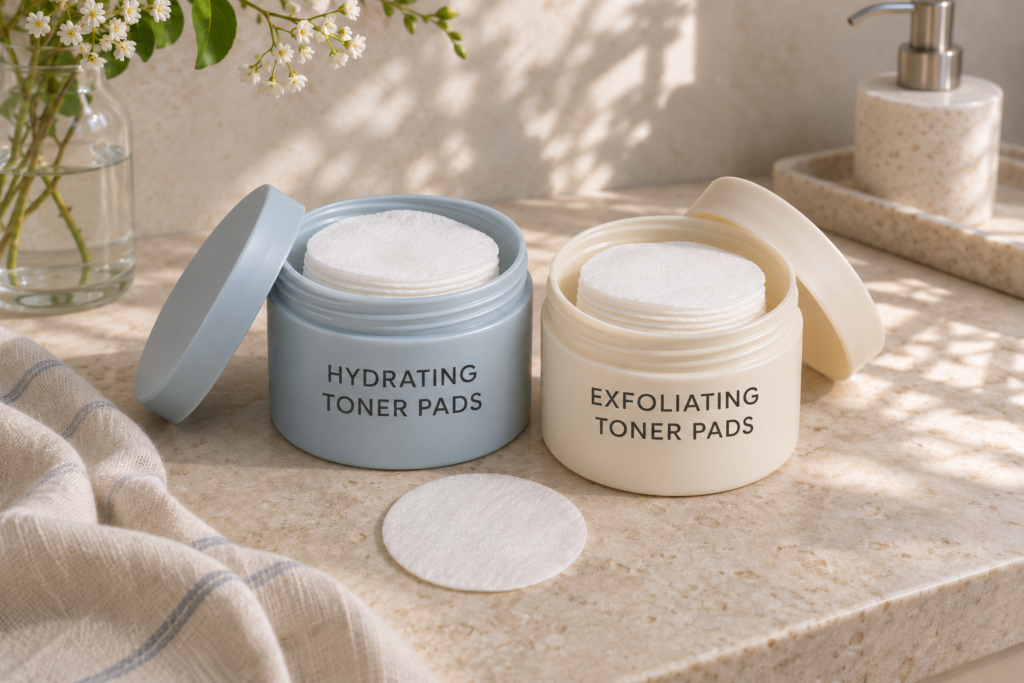
You open two jars of toner pads, and they look almost identical. Both have little rounds soaked in liquid, and both promise some version of smoother, glowing skin. Then you turn them over. One lists panthenol and hyaluronic acid. The other lists lactic acid and salicylic acid, along with a few moisturizing ingredients of its own. Which one belongs in your bathroom?
Start with what made you look for toner pads in the first place. If your face feels tight after washing, you may be looking for an extra layer of moisture. If you’re shopping because of rough texture, you may be looking for an exfoliant. Once you know which job you want the pad to do, the label is easier to read.
What’s the difference between hydrating and exfoliating toner pads?
Toner pads are pieces of material soaked in a skin-care formula. The convenience is that you can lift one out and apply the liquid without pouring it onto a separate cotton round. What the pad does depends on what it’s soaked in and, in some cases, how textured the pad is.
| Main purpose | Add a layer of light hydration | Help remove dead cells from the skin’s surface |
| Ingredient clues | Glycerin, hyaluronic acid or sodium hyaluronate, and panthenol | Glycolic acid or lactic acid (AHAs), or salicylic acid (a BHA) |
| What to check | Whether you already get enough hydration from your routine | Whether the formula and pad texture fit your skin and the products you already use |
Some pads do both. A formula can contain an exfoliating acid and still leave your skin feeling soft after a swipe. That’s why an ingredient highlighted on the front of the jar only tells you part of the story.
What to look for in a hydrating toner pad
If you want a light layer of moisture after cleansing, look for ingredients such as glycerin, hyaluronic acid or sodium hyaluronate. Panthenol is another ingredient you’ll see on hydration-focused labels. Some formulas also include ceramides. You’ll find several of these ingredients in bottled toners too, so the pad largely comes down to how you like to apply the product. CeraVe’s Hydrating Toner ingredient list
If you’re considering a bottled toner, our milky toner guide can help you decide whether you need another hydration step.
A pad might appeal to you if you like a quick swipe after washing your face, or if the label says you can leave it on briefly, such as on your cheek. Check the directions before using any pad that way. If you already reach for a liquid toner and a moisturizer that leave your skin comfortable, think about when you’d actually use the pads. Buying a jar may give you a second version of a step you already enjoy.
A small label detail can save some confusion here. Hyaluronic acid has “acid” in its name, but you’ll find it on the hydration side of the comparison. It’s a different ingredient from glycolic or salicylic acid. If you spot both hyaluronic acid and an exfoliating acid on the same label, read the directions with the exfoliating ingredient in mind.
What to look for in an exfoliating toner pad
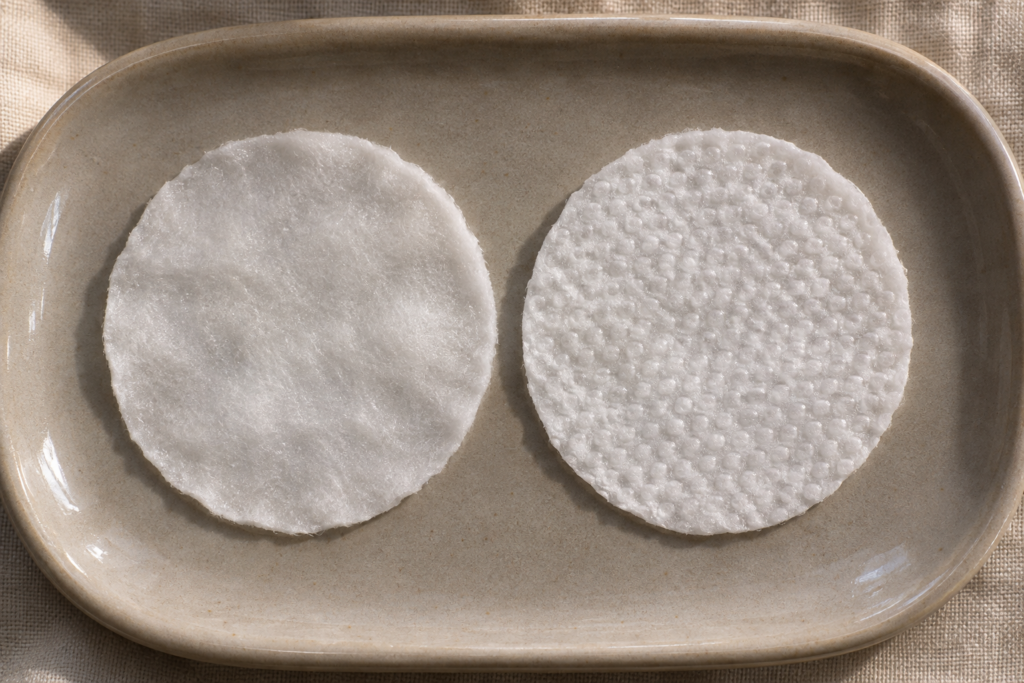
Look for the name of the exfoliating ingredient and read the directions for the specific jar. Lactic acid and glycolic acid are alpha hydroxy acids, or AHAs. Salicylic acid is a beta hydroxy acid, or BHA. If the brand gives a percentage, check which ingredient it applies to. A percentage advertised for one ingredient or blend tells you little about the strength of everything else in the jar. Product formulation matters too. FDA guide to alpha hydroxy acids
Check the pad itself. Some pads have a smooth side and a raised or embossed side. Exfoliating acids work through the formula, and rubbing a textured pad across the skin can add mechanical exfoliation. Use a light touch. The American Academy of Dermatology notes that mechanical exfoliation can be too irritating for some people, including those with dry or sensitive skin. AAD guide to exfoliating at home
Read two labels side by side.
Affiliate disclosure: I may earn a commission if you buy through an affiliate link in this article. As an Amazon Associate, I earn from qualifying purchases.
Biodance Cera-nol Gel Toner Pads are a hydration-focused example. The brand lists panthenol, several forms of hyaluronic acid, and ceramides. Its directions describe gently swiping the pad after cleansing and using it on areas where you want extra hydration. Biodance ingredient list and directions
View Biodance Cera-nol Gel Toner Pads (60 count) on Amazon US.
Medicube Zero Pore Pads are a useful example of the overlap. The brand lists lactic acid and salicylic acid in a dual-textured pad. The same list includes glycerin, panthenol, and sodium hyaluronate. If you were shopping for hydration alone and stopped reading when you spotted glycerin, you’d miss the exfoliating part of the formula. Medicube ingredient list and directions
View Medicube Zero Pore Pads 2.0 (70 count) on Amazon US.
Six things to check before buying
- The job you want it to do. Finish the sentence “I want a toner pad because…” before comparing jars. “My face feels tight after washing” and “I want to try an exfoliant for rough texture” send you looking for different ingredients.
- The full ingredient list. Check the packaging or the brand’s page for the exact version you are buying. Two jars from the same range can have different formulas and directions.
- Fragrance. If fragrance tends to bother your skin, check for a fragrance-free label and look for ingredients you already know you react to. An unscented product can still contain fragrance-related ingredients. AAD guidance on testing skin-care products
- The texture and directions. Check whether the pad is smooth, textured, or dual-sided. See whether the brand directs you to swipe it on, leave it in place briefly, or rinse the formula off.
- What’s already in your routine. Look at the products you use on a normal evening. The AAD advises taking extra care with exfoliation if you use retinol, a prescription retinoid, or benzoyl peroxide, since the combination can worsen dryness or irritation. AAD guide to exfoliating at home
- The cost of one use. A $24 jar with 60 pads works out to 40 cents each. If you plan to use one on each cheek, that’s 80 cents every time. Compare the price based on how you’ll actually use the pads.
If you decide to try a new pad
Test it on a small area before applying it across your face. Follow the product’s instructions, and stop using it if you notice a reaction such as itching, swelling, or redness. For an exfoliating pad, how often you use it depends on the formula and how your skin responds. Moisturize after exfoliating. AAD guidance on testing skin-care products · AAD guidance on exfoliation
If the pad contains an AHA, pay attention to the sunburn warning. The FDA advises using sunscreen, wearing protective clothing, and limiting sun exposure while using AHA products and for a week afterwards. FDA advice on AHAs and sun sensitivity
If you are curious about the pad because the brand calls it suitable for daily use, think about what that would mean alongside the rest of your routine. Would it replace an exfoliant you already use, or would you be adding a second one? That’s an easier decision to make before you open the jar.
Would you use the whole jar?
Think about the last few evenings you washed your face. Would reaching for a pre-soaked pad have made that routine easier? Would it have added something you were missing? If a quick swipe is a format you’ll enjoy, a jar may earn its place. If your moisturizer already leaves your face comfortable and you rarely reach for the toner you own, you can save the shelf space and see how your current routine feels.