
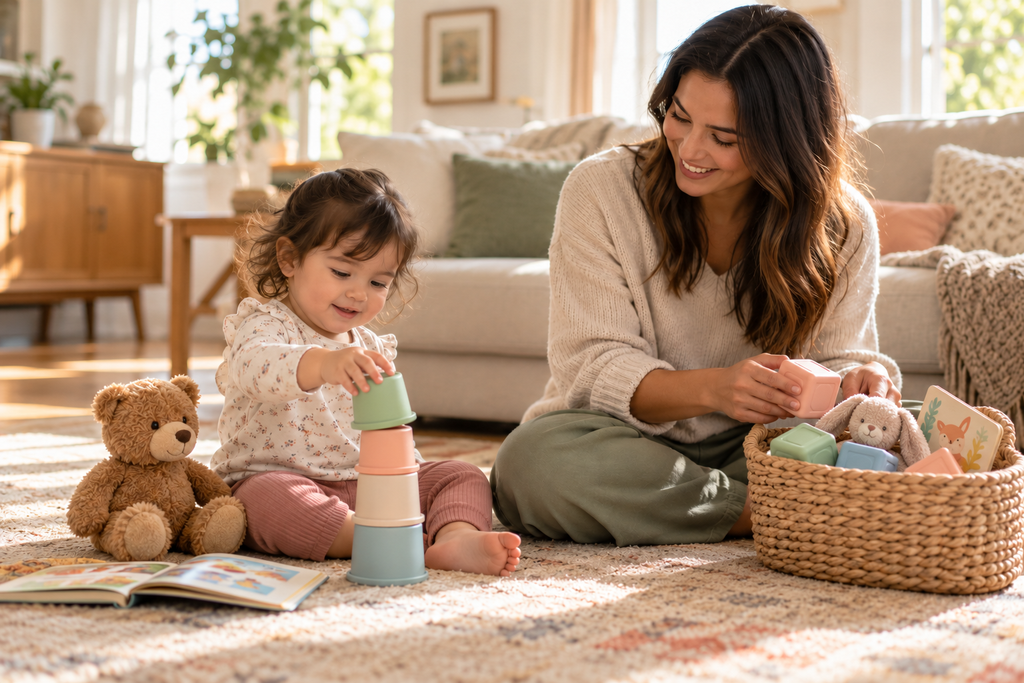
The laundry is waiting. You’ve reheated your coffee twice. And your toddler is following you around, looking for something more interesting than whatever you’re trying to finish.
What can they do right now—without a screen, a shopping trip, or an activity that takes longer to prepare than it lasts?
Start with something small: a few stacking cups, a basket of soft toys, or a familiar book. Simple materials give toddlers opportunities to explore, pretend, and try things for themselves. The American Academy of Pediatrics recommends everyday play materials such as cups, books, blocks, and crayons.
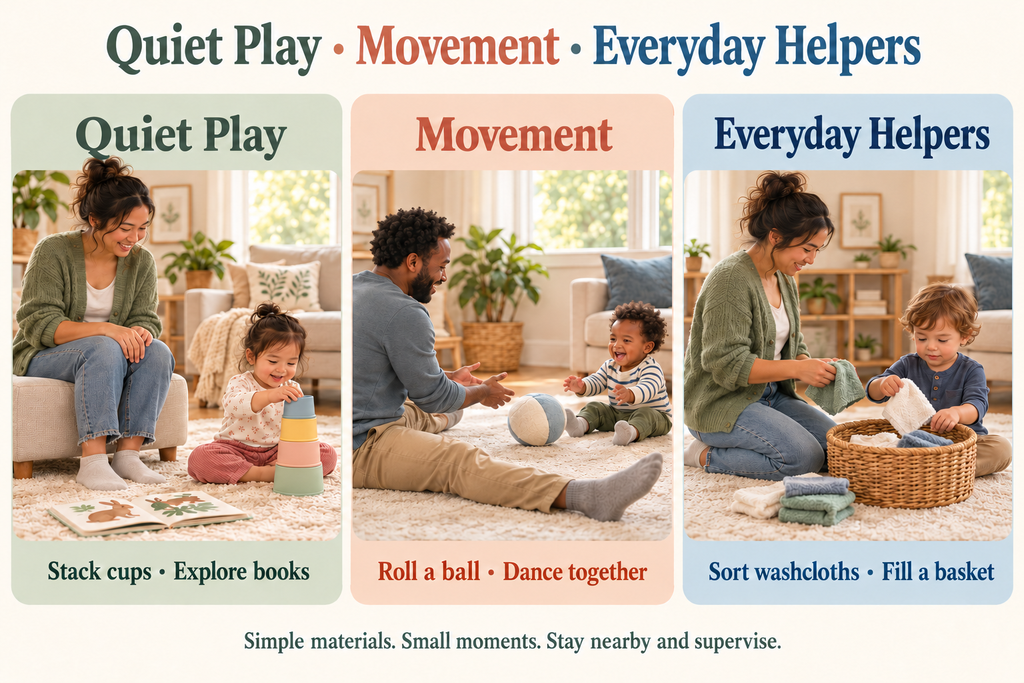
Below are practical ideas for quiet moments, movement breaks, and everyday routines. Choose one that suits your child’s interests and abilities, then see where the play goes.
Need an Idea Right Now? Start Here
| If your toddler wants… | Try… | What you need |
|---|---|---|
| To put things in and take them out | A toy basket game | A small basket and a few large, age-appropriate toys |
| Something quiet | A picture hunt | A familiar board book |
| To build and knock things down | A little tower | Toddler stacking cups or large blocks |
| To move | Follow-the-leader | A clear floor space |
| To copy what you’re doing | A laundry helper game | Washcloths and a basket |
| To pretend | A stuffed animal bedtime | A stuffed animal and a washcloth |
Before you begin: check the materials and the space. Choose sturdy, age-appropriate items without small detachable parts, sharp edges, or accessible batteries. Small objects can cause choking, particularly for children under three. Stay nearby and actively supervise.
These activities can fit into a busy day, but they don’t replace adult supervision. Pick a moment when you can keep watching and respond.
Quiet Activities With Very Little Setup
1. Fill and Empty a Toy Basket
For a toddler, putting something into a container and taking it out again can be an activity all by itself.
What you need: a small, open basket or sturdy box and a few large toys suitable for your child’s age.
How to start: put one toy inside and say, “In.” Take it out and say, “Out.” Let your toddler try, then follow their lead.
Make it simpler: offer just two toys and one container.
Add a little challenge: use two containers and invite your child to move the toys between them.
Cleanup and supervision: the toys can stay in the basket when play ends. Check that the container has no staples, loose pieces, or heavy lid.
UNICEF includes this kind of “in and out” play among its simple activities for young children.
2. Build a Small Tower
A tower doesn’t need to be impressive. Two cups stacked together may be enough to get started—and knocking them down may be the favorite part.
What you need: toddler stacking cups or large, age-appropriate blocks.
How to start: build a short tower on the floor. Let your child add a piece, take it apart, or knock it down.
Make it simpler: place two pieces together and let your child separate them.
Add a little challenge: see whether they want to build a taller tower or a row.
Cleanup and supervision: put the pieces in one container afterward. Use lightweight items and build away from walkways.
3. Go on a Picture Hunt
You don’t have to read every word of a book for it to become part of play.
What you need: a familiar board book.
How to start: look through it together and ask, “Where’s the dog?” or “Can you find the shoes?” Leave room for your toddler to point, make a sound, or turn the page.
Make it simpler: name and point to one picture yourself.
Add a little challenge: invite your child to copy an animal sound or describe what a character is doing.
Cleanup and supervision: return the book to an accessible book basket. If your toddler starts chewing or tearing it, help them handle it or offer another activity.
Keep it playful. There’s no need to turn every page into a quiz.
4. Draw Together
A few lines on paper can be enough. Your toddler doesn’t need a picture to copy or a finished project to show.
What you need: paper and age-appropriate, non-toxic crayons.
How to start: draw beside your child and let them explore the marks they can make.
Make it simpler: offer one crayon at a time.
Add a little challenge: ask whether they’d like you to draw a road or a big circle for them to add to.
Cleanup and supervision: collect the crayons when finished. Watch for mouthing and remove broken pieces; non-toxic materials still aren’t meant to be eaten.
Activities for Toddlers Who Need to Move
Sometimes the next activity needs a little more movement.
5. Roll a Soft Ball
What you need: a soft, age-appropriate ball and a clear floor space.
How to start: sit a short distance apart and roll the ball toward your toddler. Invite them to send it back.
Make it simpler: sit closer together.
Add a little challenge: roll toward a large, open box as a target.
Cleanup and supervision: put the ball away when finished so it doesn’t become a tripping hazard. Keep play away from stairs and breakable objects.
6. Play Follow-the-Leader
What you need: enough clear space to move safely.
How to start: take a few slow steps, clap your hands, or reach up high. Invite your toddler to copy you.
Make it simpler: try movements while sitting together.
Add a little challenge: let your child become the leader. You may discover that their preferred instruction is “do that again.”
Cleanup and supervision: there’s nothing to put away. Keep movements within your child’s abilities and avoid climbing or jumping from furniture.
7. Have a Short Dance Break
What you need: your voice or music played without a visible screen.
How to start: sing a familiar song and sway, clap, or march together.
Make it simpler: sit and clap along.
Add a little challenge: pause occasionally and see whether your toddler enjoys stopping and starting with you.
Cleanup and supervision: keep the floor clear and the volume comfortable. If stopping the music frustrates your child, skip that part and keep dancing.
Turn Everyday Tasks Into Play
Toddlers often want to join whatever the adults are doing. Giving them a small, manageable role can create a play opportunity within an ordinary routine. UNICEF suggests age-appropriate household activities, including sorting clothes.
8. Invite a Laundry Helper
What you need: clean washcloths and a small basket.
How to start: ask your toddler to put the washcloths into the basket while you fold nearby.
Make it simpler: offer one cloth at a time.
Add a little challenge: sort by color together or make two piles.
Cleanup and supervision: the cloths finish in the basket. Keep detergent, laundry pods, cords, and appliances out of reach.
Expect some unfolding. Helping at this age may add a little time to the task, but it can also give your child a way to join you.
9. Set Up a Pretend Kitchen
What you need: a lightweight bowl and a safe spoon.
How to start: invite your toddler to stir a pretend meal or “cook” for a stuffed animal.
Make it simpler: offer just the bowl and spoon.
Add a little challenge: ask what they’re making and follow their story.
Cleanup and supervision: store the items together. Set up away from the stove, knives, hot drinks, and appliance cords. Choose utensils without sharp edges or detachable parts.
This activity works best in a safe play area where you can supervise—not beside active cooking.
Simple Pretend Play
10. Put a Stuffed Animal to Bed
What you need: a stuffed animal and a washcloth.
How to start: say, “Teddy looks sleepy.” Invite your toddler to tuck the toy in, sing a song, or say goodnight.
Make it simpler: demonstrate one action and let your child copy it.
Add a little challenge: let your toddler decide what happens next. Perhaps Teddy needs breakfast immediately after bedtime.
Cleanup and supervision: keep the items in a small play basket. Check the toy for loose eyes, buttons, or damaged seams.
11. Make a Toy Garage From a Box
What you need: an open cardboard box and large toy vehicles suitable for your child’s age.
How to start: place the box on the floor and show how a vehicle can drive in and out.
Make it simpler: offer one vehicle.
Add a little challenge: make parking spaces or let the box become something else entirely.
Cleanup and supervision: store the vehicles inside afterward. An adult should remove staples, tape scraps, and loose packaging before play. Avoid boxes with heavy lids or damaged edges.
What If Your Toddler Loses Interest?
An activity that works today may be ignored tomorrow. You can adjust without preparing something entirely new.
Try:
- Offering fewer items. One bowl and two toys may be easier to explore than a full basket.
- Joining briefly. Show one possibility, then give your child room to try.
- Following their version. If the stacking cups become pretend bowls, the activity can go with them.
- Returning to a favorite. Familiar play is still play.
- Checking what they need. Sometimes hunger, tiredness, or wanting your attention matters more than the activity.
There’s no promised number of minutes here. Choose play that suits your child today, and allow it to end when they’re ready.
Keep a Small Play Basket Ready for Tomorrow
A small basket can make getting started easier. Depending on your child’s age and interests, it might hold:
- A board book.
- Toddler stacking cups.
- A few large blocks.
- A stuffed animal.
- A washcloth for pretend play.
Keep drawing materials separately if they need closer supervision, and check everything regularly for damage or loose parts.
You can swap an item occasionally, but there’s no need to create a new setup every morning.
Choose One Thing and Begin
If you’re wondering what to try today, start with the easiest option already within reach.
Roll a ball. Look for animals in a book. Hand your toddler a washcloth while you fold nearby. Help a stuffed animal settle down for its very important nap.
The activity doesn’t have to fill the afternoon. It only needs to give you somewhere to begin.